Introduction
FMCG companies operate in one of the most fast-moving and competitive sales environments. Thousands of retailers, distributors, sales representatives, territories, products, and daily store visits must be managed efficiently. For sales managers, keeping track of what is happening in the field can become difficult when teams depend on spreadsheets, phone calls, WhatsApp updates, and manual reports.
This is where field sales automation for FMCG becomes valuable.
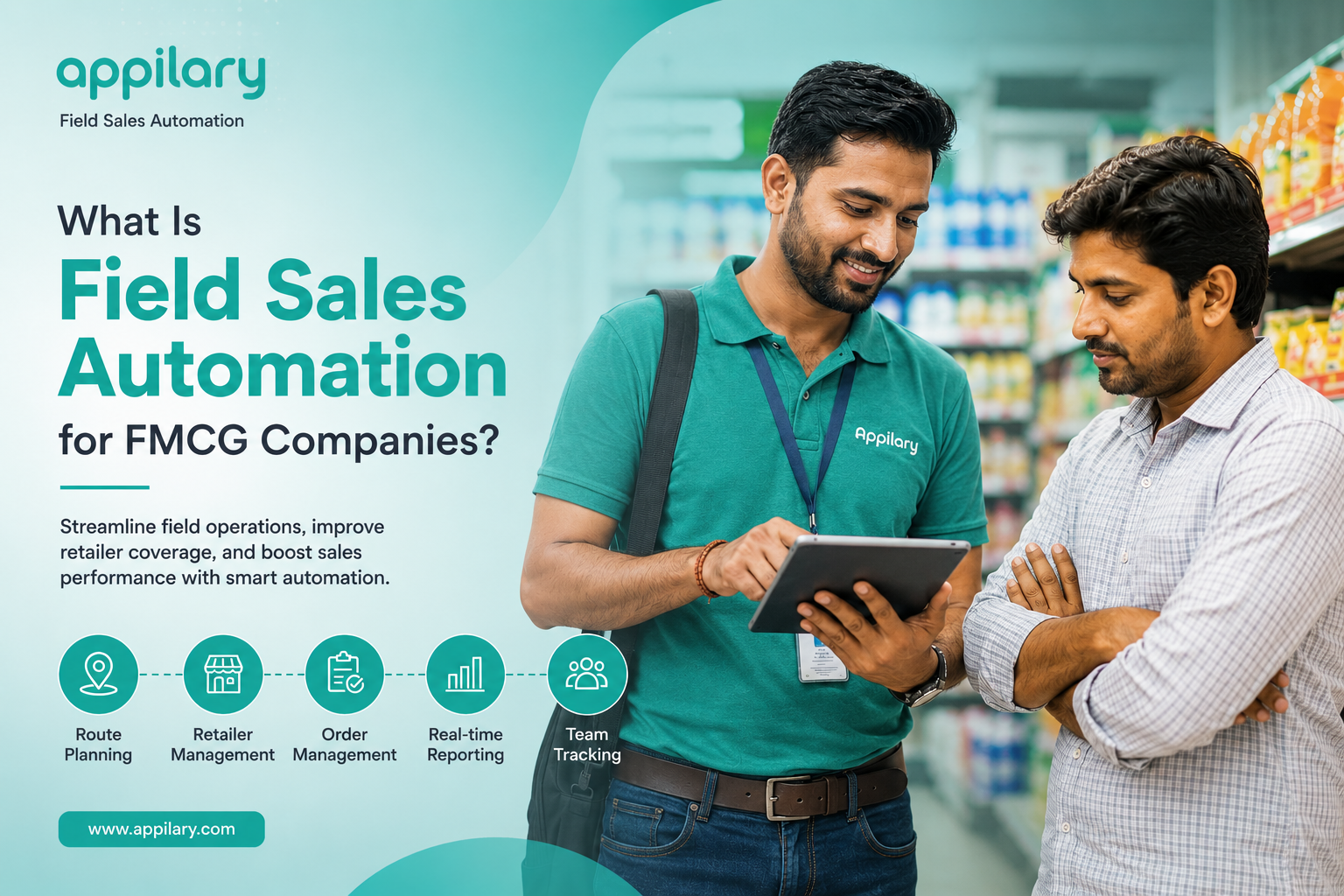
Field sales automation uses digital tools to manage and monitor field sales activities from a centralized platform. Sales representatives can use a mobile application to plan visits, navigate assigned routes, record attendance, capture retailer information, place orders, complete merchandising activities, and submit reports.
Managers, meanwhile, get real-time visibility into field activities and sales performance.
Instead of asking, "Did the salesperson visit the retailer?" or "How many outlets were covered today?", managers can access structured data and dashboards to understand what is happening across territories.
The Problem
FMCG sales teams typically manage a large number of retail outlets and distributors. A salesperson may be responsible for visiting dozens of stores in a single day.
When these activities are managed manually, several problems can occur:
- Difficulty tracking retailer visits
- Poor visibility into salesperson activities
- Inefficient route planning
- Delayed sales and order reporting
- Inaccurate attendance records
- Limited visibility into merchandising execution
- Missed retailer visits
- Inconsistent reporting
- Difficulty monitoring sales targets
- Time-consuming administrative work
For example, a sales representative may report that 25 outlets were visited during the day. Without digital verification, a manager may have limited visibility into when those visits happened, where they happened, or what activities were completed.
As the sales team grows, these challenges become increasingly difficult to manage.
Why It Happens
The problem is not necessarily the sales team. In many cases, the underlying processes are still manual.
A traditional FMCG sales operation may depend on:
Manual attendance → Phone calls → Paper or spreadsheet reports → Manual data entry → Manager review → Delayed decisions
This creates multiple points where information can be lost, delayed, or entered incorrectly.
Field sales representatives also spend considerable time on administrative tasks instead of selling. After completing their market visits, they may need to prepare reports, update spreadsheets, send photographs, and communicate daily performance through different channels.
Another challenge is fragmented information.
Sales data may exist in one system, retailer information in another, attendance in a spreadsheet, and field photographs in WhatsApp conversations.
Without a centralized system, managers struggle to get a complete picture of field performance.
Business Impact
Manual field sales processes can directly affect FMCG sales execution.
1. Lower Field Productivity
Sales representatives may spend too much time on reporting and route-related activities instead of engaging with retailers.
2. Poor Retail Coverage
Without structured journey planning and monitoring, important outlets can be missed.
3. Delayed Decision-Making
When field data reaches managers at the end of the day or later, corrective action becomes difficult.
4. Higher Operational Costs
Inefficient routes, repeated visits, manual reporting, and administrative work can increase operating costs.
5. Limited Field Visibility
Managers may not have a reliable real-time view of salesperson activity across different territories.
6. Inconsistent Execution
Different sales representatives may follow different processes, making it difficult to maintain consistent execution across markets.
For an FMCG company operating across multiple cities, states, distributors, and territories, these small inefficiencies can become significant at scale.
The Modern Solution
Field sales automation software brings field operations, sales activities, retailer information, and performance data into one digital platform.
Instead of managing field operations through disconnected tools, FMCG companies can provide sales representatives with a mobile application and managers with a centralized dashboard.
A typical automated workflow can look like this:
Assign Territory → Plan Routes → Visit Retailers → Verify Visit → Capture Sales Data → Record Orders → Complete Merchandising → Submit Data → Analyze Performance
The salesperson completes activities through the mobile application, while managers can monitor performance through dashboards and reports.
Automation can also help standardize sales processes across territories.
For example, when a salesperson visits a retailer, the application can capture relevant information such as:
- Retailer details
- Visit time
- Location
- Orders
- Product availability
- Stock information
- Display or merchandising status
- Photographic proof
- Retailer feedback
This creates a structured source of field data that can be analyzed and acted upon.
Features of Field Sales Automation for FMCG
1. Field Force Tracking
Managers can monitor field activities and understand whether assigned visits are being completed.
Location-based verification can help businesses validate field visits while maintaining appropriate privacy controls.
2. Attendance Management
Sales representatives can record attendance digitally, reducing dependence on manual attendance registers.
3. Route Planning
Route planning helps representatives organize their daily retailer visits efficiently.
Better routes can reduce unnecessary travel and improve outlet coverage.
4. Permanent Journey Plan (PJP)
A PJP helps define which retailers or outlets should be visited on particular days or at specific frequencies.
This makes sales coverage more structured and predictable.
5. Retailer Management
Businesses can maintain a centralized database containing retailer information, locations, categories, visit history, and other relevant details.
6. Order Management
Sales representatives can capture retailer orders directly from the field, reducing manual order-entry work and improving data availability.
7. Beat and Territory Management
Managers can organize sales representatives according to territories, beats, distributors, markets, and retailer groups.
8. Merchandising Monitoring
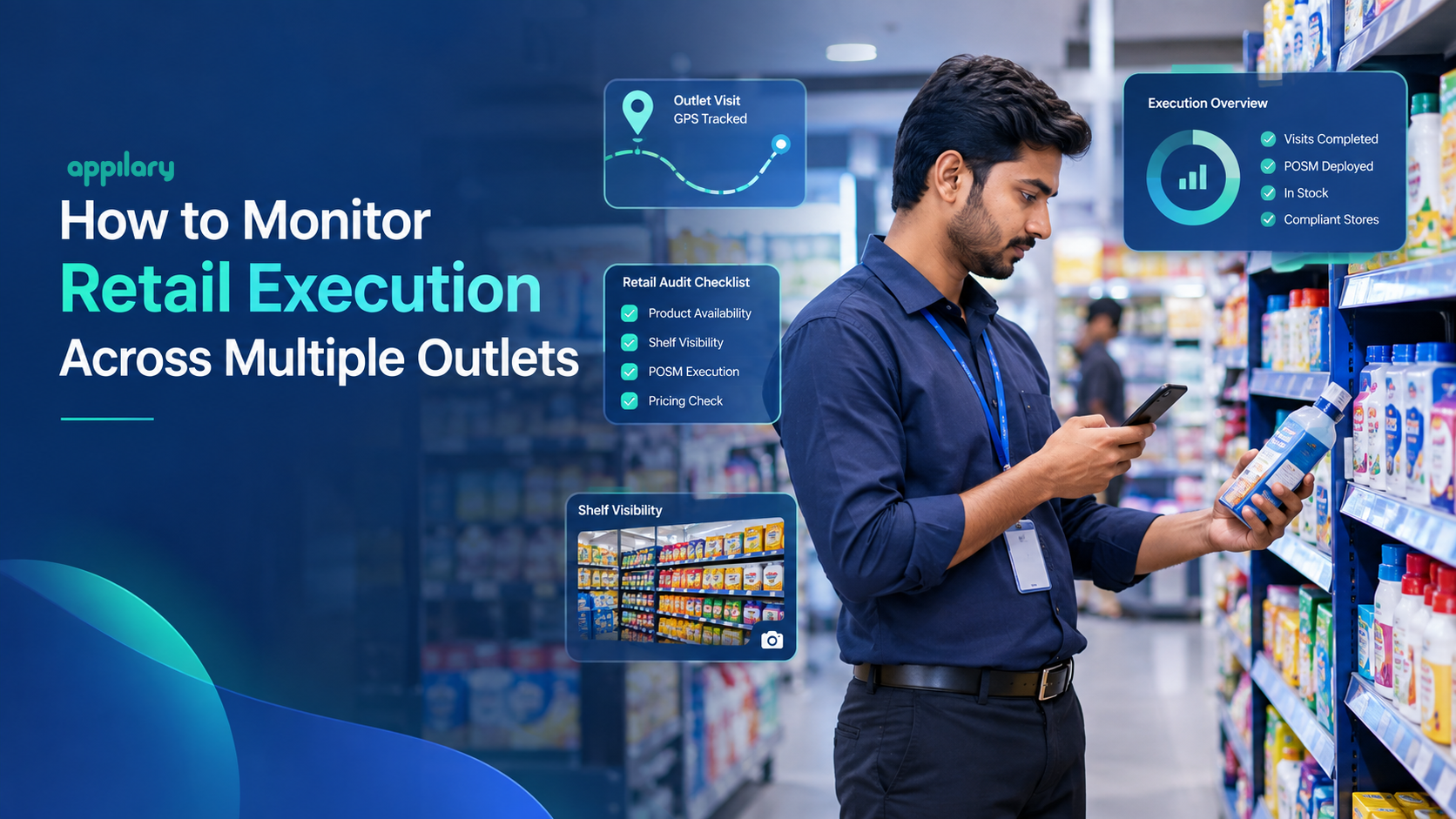
Sales teams can record product displays, shelf availability, POSM placement, branding, and other merchandising activities.
Photographs can provide supporting evidence of execution.
9. Real-Time Dashboards
Managers can view important metrics such as:
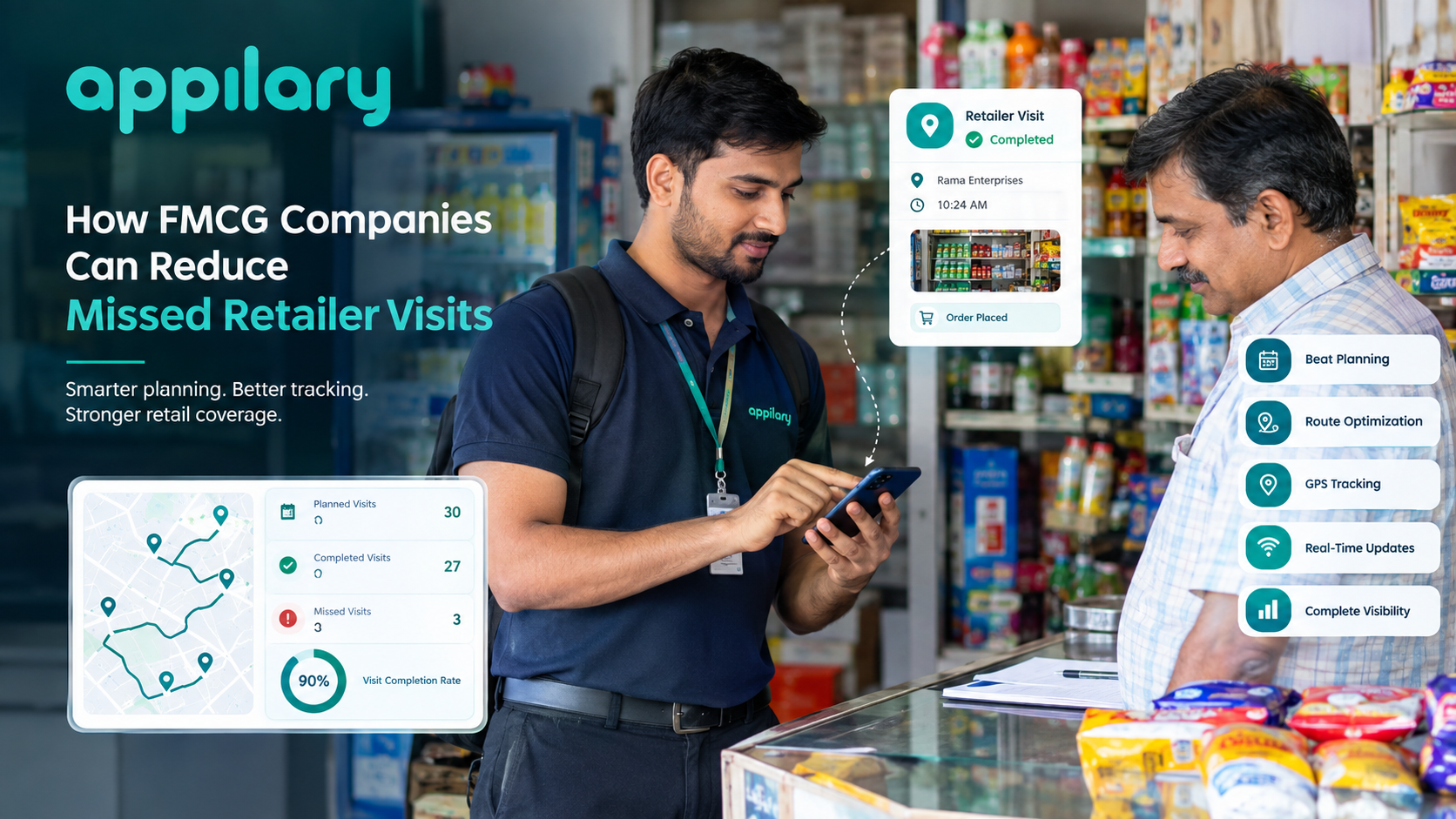
- Planned visits
- Completed visits
- Outlet coverage
- Sales performance
- Order value
- Attendance
- Productivity
- Target achievement
10. Automated Reporting
Instead of preparing reports manually, managers can generate structured reports from field data.
This can significantly reduce reporting time.
Benefits of Field Sales Automation for FMCG Companies
Improved Sales Productivity
Automation reduces repetitive administrative work and allows sales representatives to spend more time with retailers.
Better Retail Coverage
PJP, beat planning, and visit monitoring help ensure that assigned outlets receive the required attention.
Real-Time Field Visibility
Managers can access updated field information instead of relying entirely on end-of-day reports.
Faster Decision-Making
When managers have timely data, they can identify problems and take corrective action faster.
Better Route Efficiency
Structured route planning can help reduce unnecessary travel and improve daily productivity.
More Accurate Data
Digital data capture reduces the dependence on handwritten records and manual spreadsheet updates.
Stronger Sales Execution
Standardized workflows help ensure that sales teams follow consistent processes across different territories.
Better Accountability
Clear targets, assigned outlets, visit records, and activity reports create greater visibility into field performance.
Scalable Operations
A digital system can help FMCG companies manage growing sales teams and larger retailer networks without increasing administrative complexity at the same rate.
Industry Use Cases
Field sales automation can support several FMCG operations.
FMCG Sales Teams
Sales representatives can manage retailer visits, orders, attendance, routes, and daily activities through a single application.
Distributor Management
Companies can improve visibility into distributor-related activities, sales coverage, and market execution.
General Trade
For general trade networks with large numbers of small retailers, automated visit planning and retailer management can improve market coverage.
Modern Trade
Teams can monitor store-level activities, product availability, merchandising, and execution across modern trade outlets.
Merchandising Teams
Merchandisers can record shelf availability, displays, POSM placement, and photographic proof.
New Product Launches
During product launches, companies can track outlet coverage, product availability, displays, sampling, and promotional execution.
Retail Activation
Field teams can monitor promotional campaigns, branding activities, and retail activation execution across multiple markets.
Rural and Distributed Markets
For FMCG companies operating across geographically distributed markets, GPS-enabled field sales tools can provide better visibility into field operations.
Conclusion
FMCG sales depend heavily on effective field execution. A strong product and distribution network are important, but companies also need visibility into what happens at the retailer level.
Field sales automation for FMCG helps bridge this gap by connecting field teams, retailers, routes, orders, attendance, merchandising, and performance data within a centralized digital system.
Instead of relying on manual reports and fragmented communication, businesses can build a more structured and data-driven sales operation.
The goal is not simply to track employees. The real objective is to improve sales productivity, increase retail coverage, strengthen execution, reduce manual work, and give managers the information they need to make faster decisions.
As FMCG sales networks continue to expand, field sales automation can become an important part of building an efficient, scalable, and measurable sales operation.