Introduction
In the fast-moving consumer goods (FMCG) industry, sales performance depends heavily on how efficiently sales representatives cover retailers, distributors, wholesalers, and other outlets. A well-structured FMCG beat plan helps sales teams visit the right outlets at the right time, reduce travel delays, improve outlet coverage, and increase sales productivity.
However, many FMCG companies still manage beat planning and sales routes manually using spreadsheets, WhatsApp messages, phone calls, or paper-based schedules. These methods make it difficult to monitor field sales activities, optimize routes, and ensure that every planned outlet is actually visited.
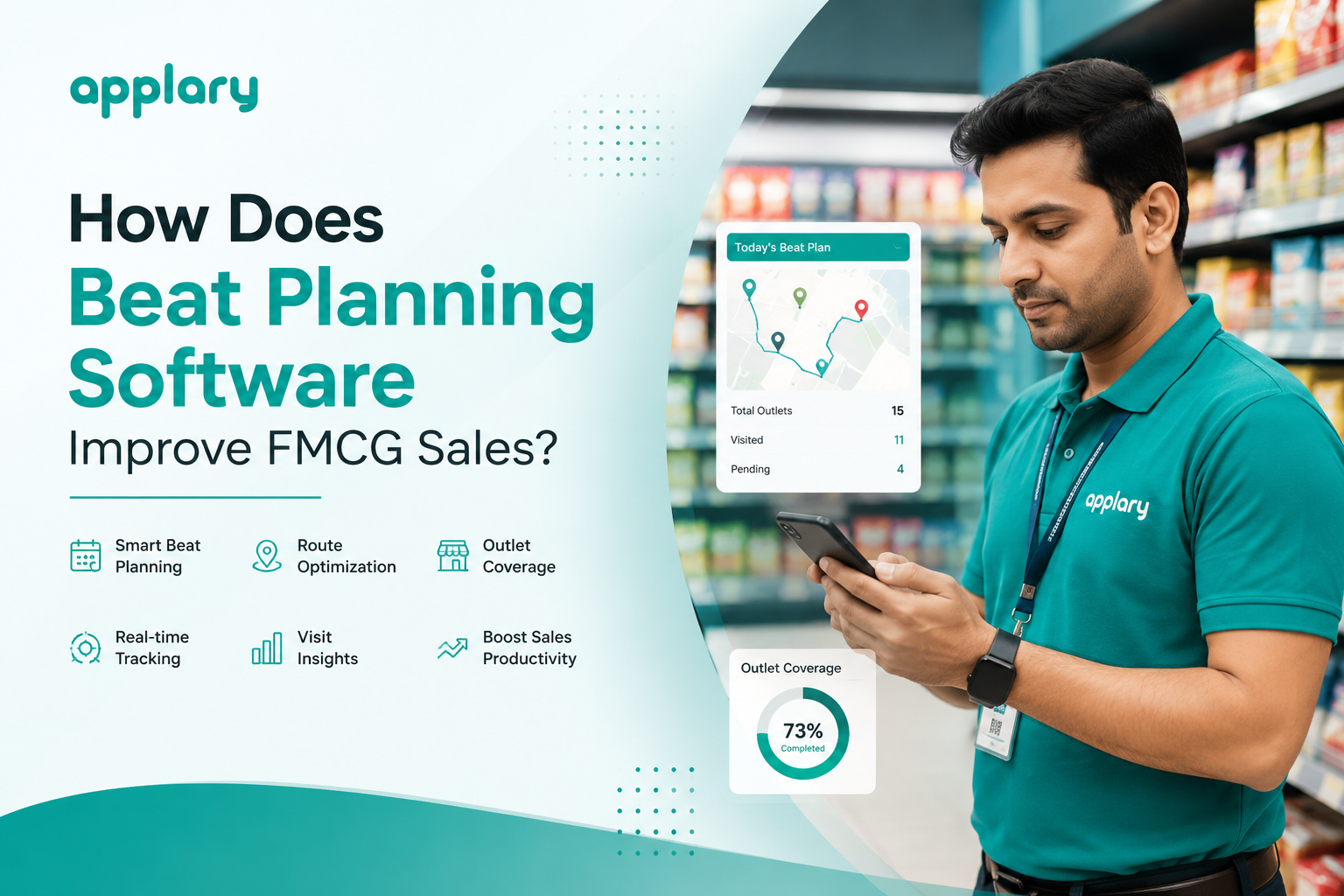
Beat planning software provides a smarter approach by combining FMCG sales route planning, GPS tracking, field force management, outlet management, visit tracking, and real-time sales reports in one system.
This article explains how beat planning software can improve FMCG sales, increase sales representative productivity, and help businesses achieve better outlet coverage.
The Problem: Why FMCG Sales Teams Struggle With Beat Planning
FMCG sales representatives often manage hundreds of outlets across different locations. Without an organized beat plan, field teams may face several challenges:
- Poor outlet coverage
- Repeated visits to the same outlets
- Missed retailer visits
- Inefficient sales routes
- Excessive travel time
- Low sales representative productivity
- Difficulty monitoring field employees
- Lack of real-time sales visibility
- Inaccurate visit reports
- Difficulty comparing planned visits with actual visits
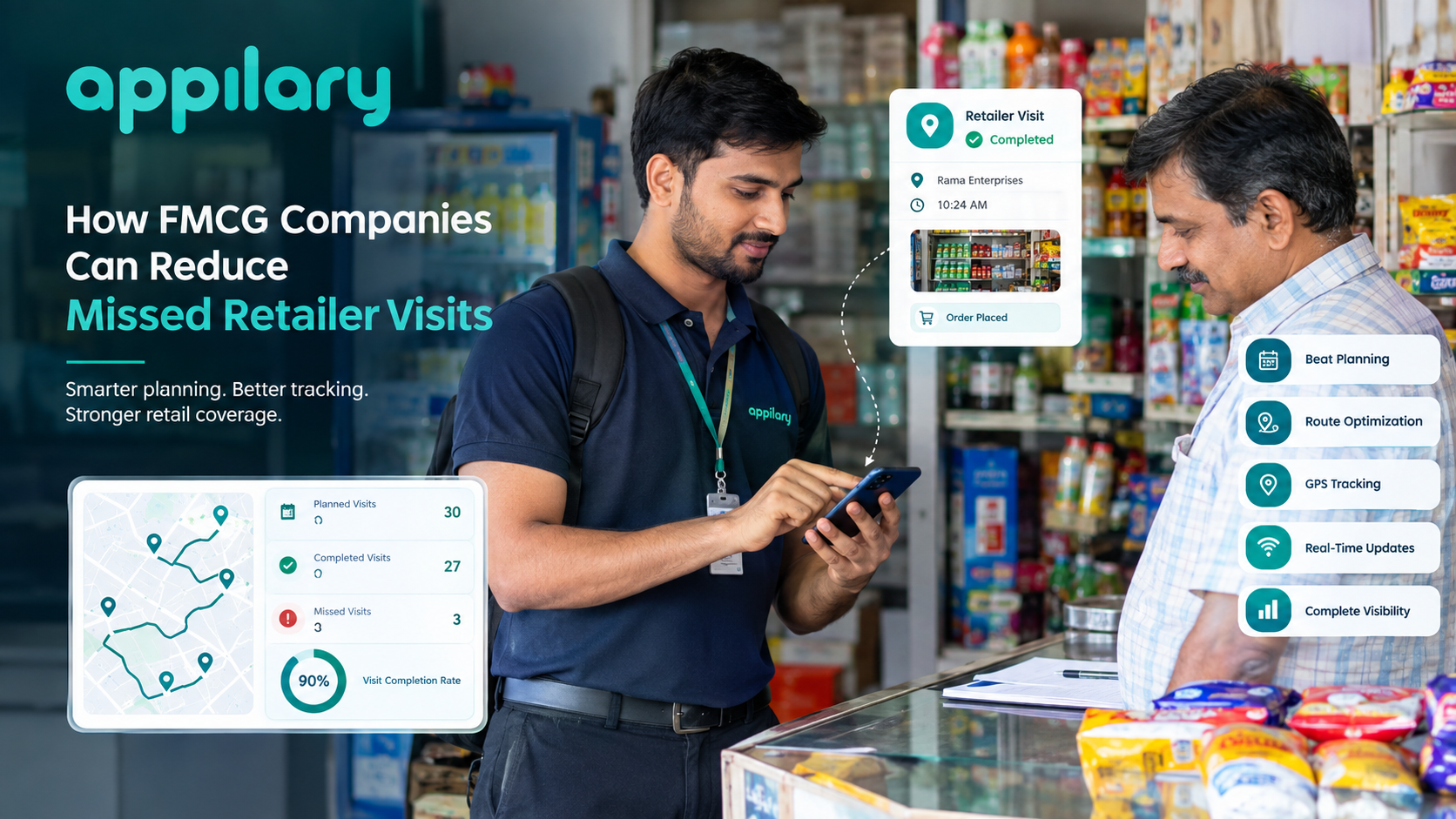
For example, a sales representative may have 30 retailers assigned for a particular day. If the route is planned manually, the representative may spend unnecessary time travelling between distant outlets and fail to complete the entire day's planned coverage.
This directly affects FMCG sales productivity and outlet coverage.
Why Does Poor Beat Planning Happen?
Traditional beat planning often depends on historical knowledge, spreadsheets, and manual coordination.
A sales manager may create a weekly or monthly FMCG sales beat plan based on:
- Retailer location
- Previous sales
- Distributor territory
- Sales representative availability
- Market importance
- Visit frequency
- Personal experience
While this approach can work for a small sales team, it becomes difficult when a company has thousands of outlets and hundreds of field employees.
Common reasons include:
1. Manual Route Planning
Managers manually decide which outlets should be visited each day without automated route optimization.
2. Limited Location Visibility
Without GPS-based field sales tracking, managers cannot easily determine whether representatives are following their assigned routes.
3. Changing Outlet Conditions
Retailers may open, close, relocate, or change their preferred visit days, making static beat plans outdated.
4. No Real-Time Monitoring
Managers may only receive reports at the end of the day, making it difficult to identify missed visits or route deviations immediately.
5. Poor Data Integration
Sales, outlet, attendance, GPS, and visit data may exist in different systems, preventing managers from getting a complete picture of field performance.
The Business Impact of Poor Beat Planning
An inefficient FMCG beat plan can affect more than just daily field activity.
Lower Outlet Coverage
Sales representatives may not visit all assigned outlets, reducing opportunities for orders and product visibility.
Higher Travel Costs
Poorly organized routes increase travel distance, fuel consumption, and time spent between outlets.
Lower Sales Productivity
More time spent travelling means less time available for selling, merchandising, order collection, and retailer engagement.
Missed Sales Opportunities
If important retailers are skipped, businesses can lose potential orders and repeat sales.
Difficult Performance Management
Managers may struggle to determine whether poor results are caused by territory potential, outlet availability, route planning, or field execution.
The Modern Solution: Beat Planning Software for FMCG
Beat planning software digitizes the entire process of creating, assigning, executing, and monitoring sales beats.
Instead of manually preparing routes, sales managers can organize outlets into optimized beats and assign them to field representatives.
The software can connect:
Outlet → Beat → Sales Representative → Route → Visit → Sales Activity → Report
This gives FMCG companies greater visibility into field execution.
A modern FMCG field sales automation software can also combine beat planning with GPS tracking, attendance, order management, outlet surveys, merchandising, and performance analytics.
Key Features of Beat Planning Software
1. Digital FMCG Beat Planning
Managers can create and manage daily, weekly, or monthly beats digitally.
A beat can include:
- Retailers
- Wholesalers
- Distributors
- Supermarkets
- General trade outlets
- Modern trade outlets
- Other sales points
This creates a structured FMCG sales route plan for every representative.
2. GPS-Based Field Sales Tracking
GPS tracking allows managers to monitor field representatives during their assigned working activities.
Managers can understand:
- Where the representative started
- Which outlets were visited
- Visit timing
- Distance travelled
- Route movement
- Completed and missed visits
This improves accountability without relying entirely on manual reports.
3. Route Optimization
Beat planning software can help organize outlets geographically so representatives spend less time travelling between locations.
Better route planning can result in:
Less Travel Time → More Outlet Visits → More Selling Time → Better Sales Productivity
4. Planned vs. Actual Visit Tracking
One of the most valuable capabilities is comparing planned visits with actual field execution.
Managers can see:
- Planned outlets
- Visited outlets
- Missed outlets
- Additional visits
- Visit duration
- Visit sequence
This helps identify gaps in FMCG outlet coverage.
5. Outlet Management
A centralized outlet database can contain important information such as:
- Outlet name
- Retailer name
- Location
- Contact details
- Channel
- Territory
- Assigned salesperson
- Visit frequency
- Previous sales
- Outlet status
This makes territory and beat management easier.
6. Real-Time Sales Reports
Managers can monitor field activity through dashboards and reports.
Typical reports can include:
- Daily visit reports
- Sales representative performance
- Beat completion
- Outlet coverage
- GPS activity
- Attendance
- Order collection
- Territory performance
7. Geo-Verification
GPS and location verification can help confirm whether a field representative reached the assigned outlet before recording a visit.
This improves the reliability of field activity data.
8. Performance Analytics
Managers can analyse sales and field execution using metrics such as:
- Beat completion rate
- Outlet coverage percentage
- Visits per representative
- Productive calls
- Orders collected
- Sales value
- Missed visits
- Travel distance
These insights help companies make better territory decisions.
Benefits of Beat Planning Software for FMCG Sales
Improve Outlet Coverage
A structured FMCG beat plan helps representatives systematically cover their assigned outlets instead of relying on memory or ad-hoc visits.
Increase Sales Representative Productivity
When routes are organized efficiently, representatives can spend more working time with retailers and less time travelling.
Reduce Travel Time
Geographically organized beats reduce unnecessary movement between outlets.
Improve Field Force Visibility
Managers gain better visibility into where representatives are working and how effectively they are completing their assigned beats.
Reduce Missed Visits
Automated planning and visit tracking make it easier to identify outlets that were planned but not visited.
Improve Sales Execution
Better beat execution creates more opportunities for:
- Order collection
- Product availability checks
- Merchandising
- New product launches
- Retailer engagement
- Promotional execution
Make Data-Driven Decisions
Instead of depending only on salesperson reports, managers can use actual field data to identify performance gaps and optimize territories.
Industry Use Cases
FMCG Distribution
Distributors can use beat planning software to organize retailer visits, monitor sales representatives, and improve territory coverage.
General Trade Sales
Sales teams visiting kirana stores and independent retailers can use digital beats to organize daily outlet coverage.
Modern Trade
Field teams can manage supermarket and large-format store visits according to predefined schedules.
Beverage Companies
Sales representatives can systematically visit outlets for order collection, stock checks, merchandising, and promotional activities.
Consumer Goods Companies
Companies selling personal care, home care, food, and other consumer products can use digital beat planning to improve field execution across territories.
Pharmaceutical and Other Field Sales Teams
The same principles can also be applied to other industries where representatives regularly visit geographically distributed customers.
Manual Beat Planning vs. Beat Planning Software
Manual Beat Planning
- Spreadsheet-based planning: Beat plans are created and updated manually using Excel or spreadsheets.
- Static routes: Routes are often fixed and difficult to adjust when outlet locations or priorities change.
- Limited visibility: Managers have little visibility into the salesperson's actual field movement.
- Manual visit reports: Sales representatives have to manually record and submit their visit details.
- Difficult to monitor execution: Managers cannot easily compare planned visits with actual visits.
- Limited analytics: Sales and field activity data is difficult to analyze in real time.
- Higher risk of missed visits: Important retailers may be skipped due to inefficient planning or poor follow-up.
- Difficult to scale: Managing beats manually becomes challenging as the number of sales representatives and outlets increases.
Beat Planning Software
- Digital beat management: Managers can create, assign, modify, and manage beats digitally.
- Dynamic route planning: Routes can be organized and optimized based on outlet locations and priorities.
- GPS-based tracking: Managers can monitor field activity and verify outlet visits using GPS.
- Automated visit records: Visits and field activities can be recorded digitally instead of relying on manual reports.
- Planned vs. actual tracking: Managers can compare planned outlets with the outlets actually visited.
- Real-time dashboards: Managers can view field activity, outlet coverage, and sales performance through centralized dashboards.
- Better outlet coverage: Structured beats help sales representatives cover more assigned outlets efficiently.
- Designed for large field teams: Digital beat planning can scale across multiple territories, sales representatives, distributors, and thousands of outlets.
How Beat Planning Improves the FMCG Sales Cycle
A well-designed beat planning system improves the complete field sales process:
Plan → Assign → Navigate → Visit → Sell → Record → Analyze → Optimize
For example:
- The manager creates a territory-based beat.
- Retailers are assigned to the appropriate sales representative.
- The representative receives the day's planned outlets.
- GPS helps support location-based field execution.
- The representative visits retailers and records sales activities.
- The manager monitors completed and missed visits.
- Reports show outlet coverage and sales performance.
- Managers use the data to improve the next beat plan.
This creates a continuous improvement cycle for FMCG field sales automation.
Conclusion
Beat planning is a critical part of FMCG field sales management. When sales representatives visit hundreds or thousands of outlets, inefficient routes, missed visits, and poor monitoring can significantly reduce productivity.
Beat planning software for FMCG helps companies move from manual route management to data-driven field execution. With features such as GPS tracking, route planning, outlet management, visit tracking, geo-verification, sales reporting, and performance analytics, companies can improve outlet coverage while giving managers greater visibility into field operations.
The objective is not simply to create more visits. It is to make every field visit more productive.
For FMCG companies looking to improve sales force productivity, outlet coverage, field employee tracking, and sales execution, digital beat planning can become an important part of a modern field sales automation strategy.
Ready to improve your FMCG sales team's beat planning and field productivity? Explore a modern field sales automation solution and turn every planned beat into measurable field performance.